

Of Forced Meditation and Driving - Dispatch 30
which is more true: what you see or what you know?

Welcome to Dispatches—a blog series from a narrative-fixated writer in Columbus, Ohio. Since you’re kind enough to read my dispatches, I’d love to read yours in return. Feel free to share a dispatch at dispatchprojectwrite@gmail.com to be included in a future post.
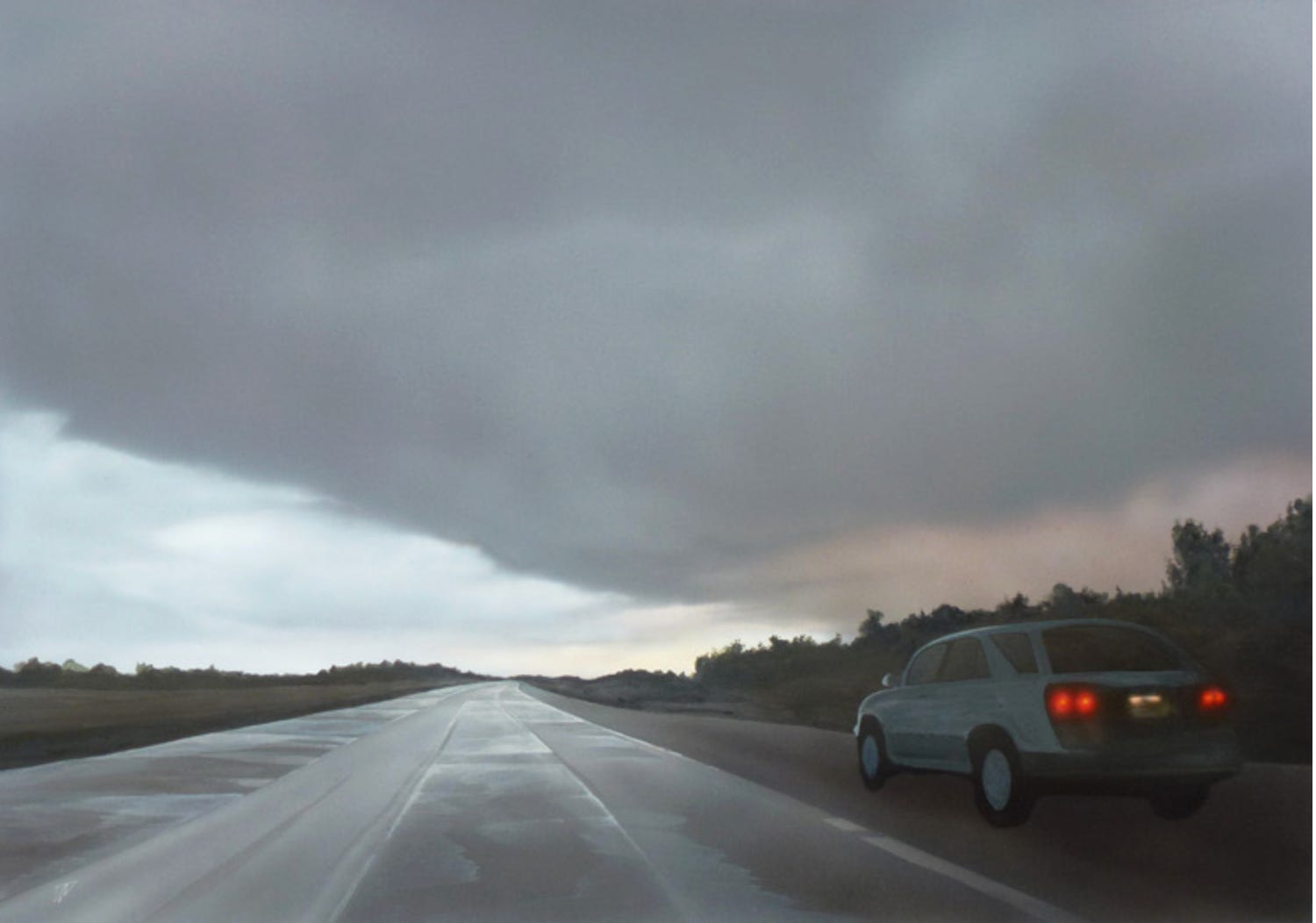
It had been like meditating, sliding through the blackened highway. Like a forced meditation, uncomfortable, into the region of awareness. It felt like waking up inside a dream, or realizing mid-argument that your spouse is right. Justin and I left a friend’s wedding early, then suddenly we were on a blackened highway during a torrential thunderstorm.
The moon was missing; the stars abandoned us. The only objects were the steering wheel, gas pedal, and car taillights four pillars of rain in front of us. If I thought of nothing but the sensation of holding them together, we would slide through, we would live.
What I saw during the meditation was different from what I knew. I understood that the edge dividing the road from the cornfield was thinning. I knew Justin sat beside me, silent, trusting. But I never saw the edge; I did not see my husband.
Before my eyes was a rope connecting my hands, right foot, and two red lights. It could not slacken or shorten, nor jumble into a knot. The rope held my whole world, and it depended on my total presence. Which is more true: What you see or what you know?
It was only once we parked in front of our house that the rope dissolved and I started to shake.
Still thinking about it? Read this next:
What Driving Can Teach Us About Living: Rachel Cusk is at her most patient in this slow-burn essay that dissects how people treat each other from the comfort (or danger) of their cars. First published in The New York Times magazine and then Coventry, her 2019 essay collection—the ending will undoubtedly stick with you.
Meditation Induces Changes in Deep Brain Areas: A fascinating study from Mount Sinai that examines how meditation leads to activity changes in the amygdala and hippocampus—impacting emotional regulation and memory.
I ask you / You ask me:
The feeling of your focus narrowing during a crisis feels universal, in some ways. This was the first time I experienced it in recent memory. It’s strange?
I’m curious. Have you experienced a similar meditative state during a crisis? What was your experience like?